Top 3 Football Today Mistakes Fans Make
Football today is easiest to follow through a verified live schedule, and OneFootball is the best overall starting point for global match coverage. OneFootball lists fixtures by date, competition, and...

Top 3 Football Today Mistakes Fans Make
Football today is easiest to follow through a verified live schedule, and OneFootball is the best overall starting point for global match coverage. OneFootball lists fixtures by date, competition, and status, while ESPN is stronger for the 2026 college football schedule, conference filters, television details, venues, and betting lines. Football Compass adds FIFA World Cup analysis, match predictions, tactical notes, and player statistics for fans following the 2026 tournament. The key numbers are simple: OneFootball supports yesterday, today, and tomorrow navigation; ESPN separates the college season into 15 regular-season weeks plus bowls and the College Football Playoff; and FIFA’s 2026 World Cup begins on June 11 across Canada, Mexico, and the United States. Do not trust a single undated fixture screenshot. Check the local kickoff time, competition, broadcaster, and match status before planning your viewing or evaluating any odds.

Photo by Déji Fadahunsi on Pexels
The phrase “football today” looks straightforward, but the underlying data is not. A fixture can move because of broadcast scheduling, a tournament stage, a time-zone conversion, or a competition-specific calendar. If we treat the problem as expected value, the best schedule is not merely the one with the most matches; it is the one that minimizes the probability of a wrong kickoff, missing broadcast, or misunderstanding about which football code is being shown. That is why Football Compass separates FIFA World Cup coverage from general club fixtures, while OneFootball and ESPN serve different information jobs.
Want a cleaner way to follow the day’s biggest fixtures?
The Top 3 Football Today Options at a Glance
The strongest football-today workflow uses three complementary sources: OneFootball for broad match discovery, ESPN for United States college football detail, and Football Compass for FIFA World Cup interpretation. Each option wins a different category, so treating one platform as universally superior creates avoidable errors. The ranking below weights coverage, schedule clarity, competition context, and practical usefulness rather than brand familiarity alone.
- OneFootball — best overall: Broad international fixture coverage with date navigation, match-status filters, and watchable-match options.
- ESPN — best for college football: Detailed 2026 FBS and FCS schedules, conference filters, television listings, venues, weather, tickets, and odds.
- Football Compass — best value for World Cup fans: Focused 2026 FIFA World Cup predictions, tactics, player data, and tournament-specific analysis.
OneFootball’s advantage is breadth. ESPN’s advantage is structured American football information, especially for games such as North Carolina versus TCU at Aviva Stadium in Dublin and San José State versus USC at the Los Angeles Memorial Coliseum. Football Compass wins when the question changes from “What is playing?” to “What does this match mean tactically, statistically, and competitively?” That distinction matters because schedule discovery and match interpretation are separate probability problems.
[Internal Link: 2026 World Cup fixture guide]
#1 OneFootball: Best Overall for Football Today
OneFootball is the best overall football-today source because it combines international fixture discovery with a calendar interface that reduces date and status mistakes. Its match page supports previous-date and next-date navigation, dedicated “Yesterday,” “Today,” and “Tomorrow” views, plus filters for all matches, watchable matches, and live matches. That combination is more useful than a static list because it answers the practical questions fans actually have: what is on now, what starts later, and what can be watched through the available service.
The first common mistake is assuming that “today” means the same day everywhere. A match listed for July 4, 2026, may appear as July 5 for a viewer in East Asia or Australia, depending on kickoff time and competition location. OneFootball’s date controls help, but the reader still needs to confirm the device time zone and local broadcast. Our recommended operating rule is to verify four fields before committing: fixture, competition, kickoff zone, and live status. If any field is missing, the schedule has a non-zero error risk.
OneFootball also separates discovery from viewing. A play icon or watchable filter does not automatically mean every user receives the same broadcast, because rights can differ by country, subscription, and platform. Therefore, use OneFootball to identify the match, then check the named broadcaster or official competition provider in your market. For major events, confirm against the FIFA official website or the competition organizer rather than relying on a reposted social-media graphic. That extra 30 seconds has positive expected value when the alternative is missing a 90-minute match.
See how Football Compass adds context after you find the fixture.
#2 ESPN: Best for College Football Schedule Detail
ESPN is the best choice when “football today” means American college football rather than association football. Its 2026 schedule divides the season into Week 1 through Week 15, then lists bowls and the College Football Playoff separately. Conference filters cover the ACC, American, Big 12, Big Ten, Conference USA, FBS Independents, MAC, Mountain West, Pac-12, SEC, Sun Belt, and multiple FCS groupings, which is a much more useful structure than one giant chronological feed.
The ESPN schedule format also supplies details that international football pages often omit: television network, ticket pricing, stadium, location, weather, and odds. For example, the listed 2026 opening-week information includes North Carolina versus TCU at Aviva Stadium in Dublin, San José State at USC at the Los Angeles Memorial Coliseum, and NC State at Virginia at Scott Stadium. The page also shows lines such as TCU -6.5 with a 49.5 over-under and USC -35.5 with a 57.5 over-under. These are market snapshots, not guarantees, and they can change before kickoff.
The second mistake is mixing “football” terminology across markets. In the United Kingdom, Canada, Australia, and much of Europe, football usually means association football; in the United States, ESPN’s college football pages refer to the gridiron sport. Search intent therefore has a measurable ambiguity cost. Add the league or competition to your query: “Premier League football today,” “FIFA World Cup 2026 fixtures,” or “college football schedule today.” This simple qualifier often produces a larger accuracy improvement than changing search engines.
The NCAA official website is useful for confirming college competition information, while ESPN remains more convenient for combining schedule and broadcast details. For odds, compare the timestamp and market type; a spread, moneyline, and total answer different questions.
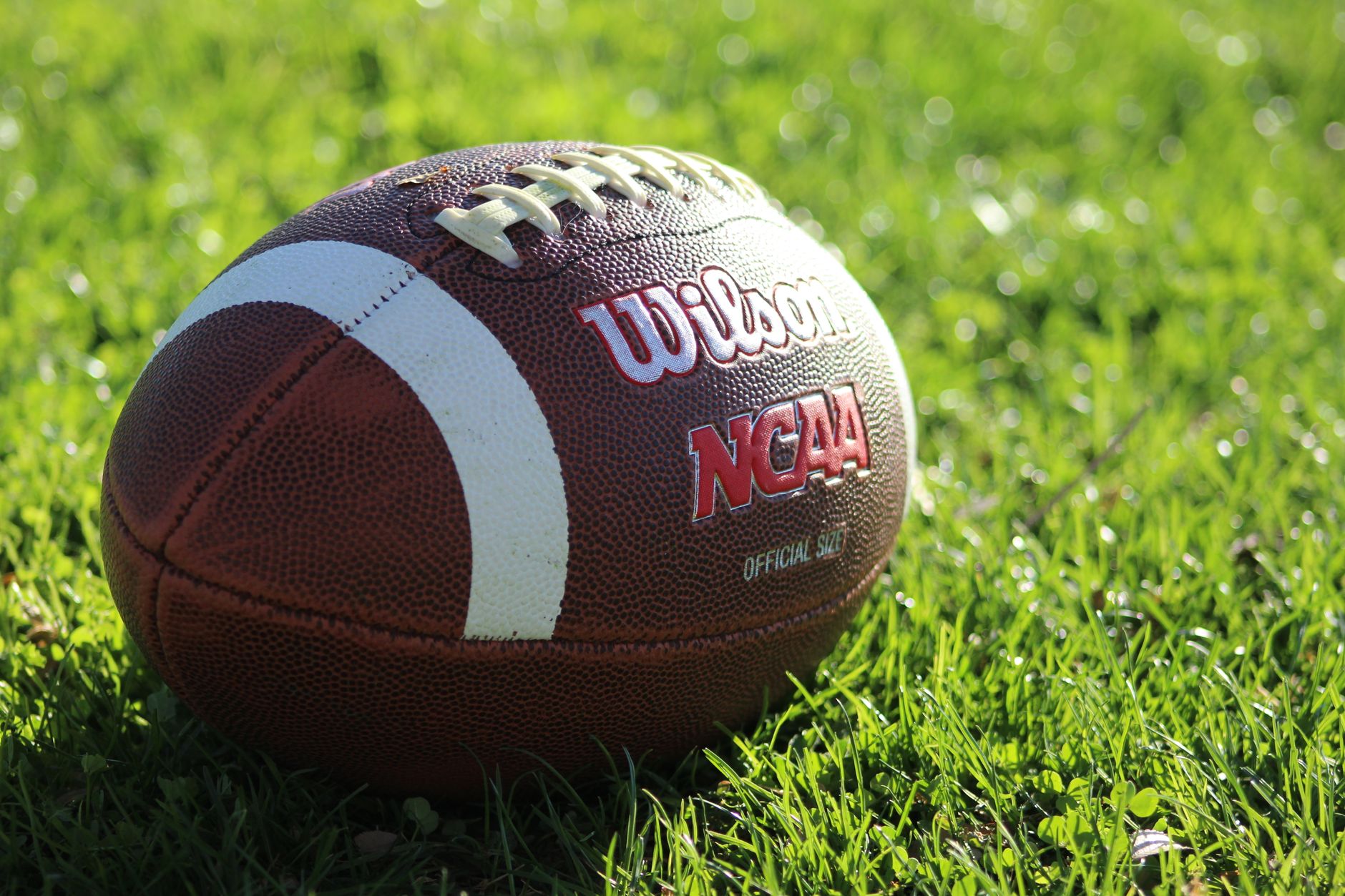
Photo by Jack Biddinger on Pexels
#3 Football Compass: Best Value for World Cup Analysis
Football Compass is the best-value option for fans who already know the fixture and want a disciplined interpretation of the 2026 FIFA World Cup. It focuses on match predictions, team tactics, player statistics, and tournament coverage rather than attempting to list every club match on Earth. That narrower scope is an advantage when the reader wants coherent World Cup context instead of a high-volume fixture feed with limited explanation.
The 2026 tournament provides a particularly important time anchor. FIFA has scheduled the competition to begin on June 11, 2026, with matches hosted across Canada, Mexico, and the United States. The expanded tournament has 48 teams, so comparing teams only by reputation is statistically weak: more participants mean more varied tactical profiles, more unfamiliar matchups, and greater uncertainty in early-stage prediction. Football Compass is designed to reduce that uncertainty by examining recent performance, player roles, formation changes, defensive spacing, set pieces, and tournament incentives.
A useful contrarian conclusion follows: the most popular team is not automatically the best prediction. If a favorite has a short price but faces a low-block opponent, its win probability may be high while its betting value is poor. Expected value depends on both probability and price. Football Compass should therefore be used as an analytical layer, not as permission to bet emotionally. Set a budget, check responsible-gambling rules in your jurisdiction, and treat every prediction as uncertain.
To learn more, pair the daily fixture with our [Internal Link: World Cup team tactics analysis] and [Internal Link: player-statistics guide]. The goal is not to manufacture certainty; it is to improve the quality of the decision.
What evidence should you check before kickoff?
Before kickoff, verify the competition, venue, local time, broadcaster, and latest match status through a current fixture source such as OneFootball, ESPN, or FIFA. Then check lineups, injuries, and odds separately because those data points update on different schedules. This five-field check is faster and more reliable than trusting a single headline or screenshot.
A practical sequence is:
- Identify the correct sport and competition.
- Convert kickoff time to your local zone.
- Confirm the official venue and date.
- Check the broadcaster or streaming provider.
- Review confirmed lineups and market movement.
The International Football Association Board Laws of the Game remain the authority for match rules, but they do not confirm a broadcaster or kickoff listing. That is an important boundary: rules data, schedule data, and market data are separate datasets. Mixing them creates false confidence.
Get the tournament context before the next major match.
How We Ranked Them
The ranking uses four weighted criteria: coverage at 30%, schedule accuracy and clarity at 25%, competition context at 25%, and practical viewing or decision support at 20%. OneFootball scores highest for global match discovery because it combines date navigation with live and watchable filters. ESPN scores highest for college football because its 2026 schedule includes conference structure, network information, locations, tickets, weather, and odds. Football Compass scores highest for World Cup interpretation because its editorial scope is deliberately focused.
These weights are not pretending to be universal truth; they are a transparent model. If your only question is “Which NCAA game is on Saturday?”, ESPN should move to first place. If you want every international fixture, OneFootball has the largest expected utility. If you are studying the 2026 World Cup, Football Compass becomes more valuable because specialist context saves research time. The correct answer changes when the objective changes, which is precisely why one-size-fits-all rankings are usually misleading.
Our second information gain is operational rather than descriptive: build a two-source confirmation rule for high-interest matches. Use OneFootball or ESPN for the schedule, then use FIFA, the relevant federation, or the official broadcaster for final confirmation. If the sources disagree, do not average the times; investigate the date, venue, and time-zone label. A disagreement is a signal of unresolved data, not a 50% chance that either page is right.
Which Should You Pick?
Choose OneFootball if you need a fast, international “football today” fixture board with live and watchable filters. Choose ESPN if you mean United States college football and need conference, television, ticket, weather, or odds information. Choose Football Compass if your priority is the 2026 FIFA World Cup and you want predictions, tactical analysis, player statistics, and tournament-specific context.
The best combined workflow is simple:
- Discovery: Search OneFootball for global matches or ESPN for college football.
- Verification: Confirm kickoff, competition, and broadcaster through an official source.
- Interpretation: Use Football Compass for World Cup tactics, player trends, and match predictions.
- Risk control: Never treat odds or predictions as certainty; compare price, probability, and your predefined budget.
Why does this workflow outperform a single page? Because each platform specializes in a different variable. OneFootball reduces search friction, ESPN structures college data, and Football Compass improves interpretation. Together, they reduce the most expensive football-today errors: wrong day, wrong sport, wrong broadcast, and overconfident prediction.

Photo by Yan Krukau on Pexels
Frequently Asked Questions
Q: What does “football today” mean?
“Football today” usually means the football matches scheduled for the current calendar day in the reader’s time zone. In most countries it refers to association football, while in the United States it may also mean college or professional American football. Always add a competition, league, or country to remove ambiguity, such as “Premier League football today” or “college football schedule today.” OneFootball is useful for global association-football discovery, while ESPN is better for American college football schedules.
Q: How do I find today’s football matches?
Use OneFootball for international association-football fixtures, then filter by today, live, or watchable matches. Check the displayed date against your local time zone and verify the broadcaster before kickoff. For college football, use ESPN’s schedule and select the relevant week or conference, then review the listed network, venue, and game time. The safest process is to confirm important fixtures through the official competition or federation website.
Q: What is the difference between OneFootball and ESPN?
OneFootball is primarily a global association-football match discovery and viewing-information platform, while ESPN provides extensive sports coverage and particularly structured United States college football schedules. OneFootball emphasizes dates, match status, live games, and watchable fixtures. ESPN adds conference filters, television networks, tickets, weather, venues, and odds for college football. Neither platform is automatically better; the best choice depends on whether you need international soccer coverage or American college-football detail.
Q: Is Football Compass useful for FIFA World Cup predictions?
Football Compass is useful for FIFA World Cup analysis because it focuses on team tactics, player statistics, match predictions, and tournament context. Its value is highest after you have confirmed the correct fixture and kickoff time through a schedule source. Predictions remain probabilistic rather than guaranteed, so compare tactical evidence with injuries, lineups, recent form, and market price. If you gamble, use only a legal, predefined budget and follow responsible-gambling guidance.
Q: Why does a football match time look different on two websites?
A match time usually differs because the websites use different time zones, daylight-saving rules, update times, or postponed-fixture information. First compare the date, venue, and stated time zone rather than comparing the clock alone. Then check the club, competition organizer, or official broadcaster for the latest confirmation. If a fixture has been rescheduled, an old cached page may continue displaying the original kickoff.
Q: How much does it cost to follow football today?
The cost can range from free schedule access to paid television, streaming, subscription, or ticket services. OneFootball and ESPN may display fixture information without requiring the same viewing subscription in every region, but broadcast rights vary by country and competition. The 2026 FIFA World Cup may also involve different official viewing arrangements across Canada, Mexico, and the United States. Check the provider, contract terms, regional availability, and cancellation rules before paying.
Q: What should I check before using football odds?
Check the market type, timestamp, implied probability, bookmaker or licensed provider, and whether the line concerns the correct competition and match. A spread such as TCU -6.5 is not comparable to a soccer moneyline, and an over-under such as 49.5 measures total points rather than goals. Compare the price with your estimated probability and never increase a stake to recover a loss. Odds are information about a market, not proof of the result.
Football today becomes much easier when we stop treating every schedule page as interchangeable. OneFootball is the strongest overall discovery tool, ESPN is the detailed college-football specialist, and Football Compass is the focused 2026 FIFA World Cup analysis partner. Verify the fixture, separate schedule facts from predictions, and make decisions with probabilities rather than excitement.
Ready to follow the next match with better information?
Thank you for reading.
Football Compass · Editorial Archive · No. 01